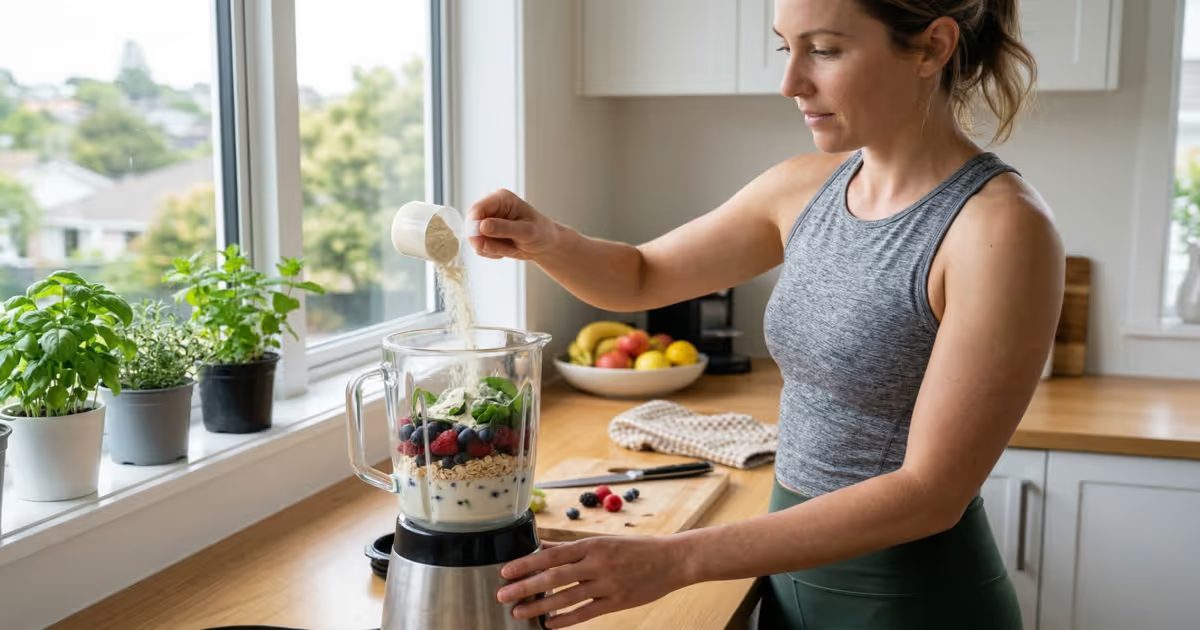
Walk into any gym or scroll through any fitness feed, and you’ll find protein powder front and centre. The promises are everywhere, faster fat burning, preserved muscle, effortless weight loss. But how much of this is backed by evidence, and how much is marketing?
This guide breaks down what protein powder can and cannot do for weight loss, which types work best, and how to use them without sabotaging your goals.
Can protein powder really help with weight loss?
Here’s the direct answer: protein powder can support weight loss, but it is not a magic fat-burning solution on its own.
Weight loss fundamentally depends on maintaining a calorie deficit over time, burning more energy than you consume. Protein powder doesn’t bypass this requirement. What it does is make it easier to hit your daily protein targets, which helps preserve muscle mass while you lose body fat.
Protein shakes offer convenience when appetite is low, time is short, or cooking skills are limited. However, drinking shakes without managing your total calories and activity level can stall progress or even cause weight gain if you’re adding calories on top of an already adequate diet.
Key takeaways:
Why protein powder is so important when you’re losing weight
Protein does more than build muscle. It supports immune function, produces enzymes and hormones, and keeps you feeling fuller for longer compared to carbohydrates or fat.
When you’re in a calorie deficit, your body looks for energy wherever it can find it. Without enough protein, it starts breaking down muscle tissue. This matters because muscle is metabolically active, each kilogram of lean mass burns approximately 20–30 calories per day at rest. Lose muscle, and your metabolism slows, making continued weight loss harder.
Research consistently shows that higher-protein diets help preserve fat-free mass during weight loss. One study found that participants consuming adequate protein lost primarily fat (up to 79% of total weight lost), while those on standard diets lost a mix of fat and muscle, often approaching a 50-50 split.
How protein powder helps during weight loss:
Protein-rich food examples:
| Food | Approximate Protein |
|---|---|
| Chicken breast (100g) | 31g |
| Greek yoghurt (170g) | 17g |
| Lentils, cooked (1 cup) | 18g |
| Firm tofu (100g) | 17g |
| Salmon (100g) | 25g |
| Eggs (2 large) | 12g |
Most people aiming for fat loss benefit from consuming around 1.6–2.2g of protein per kilogram of body weight daily. Individual needs vary based on age, activity level, and starting body composition, older adults and those doing regular strength training typically need amounts at the higher end of this range.
What is protein powder and what types are there?
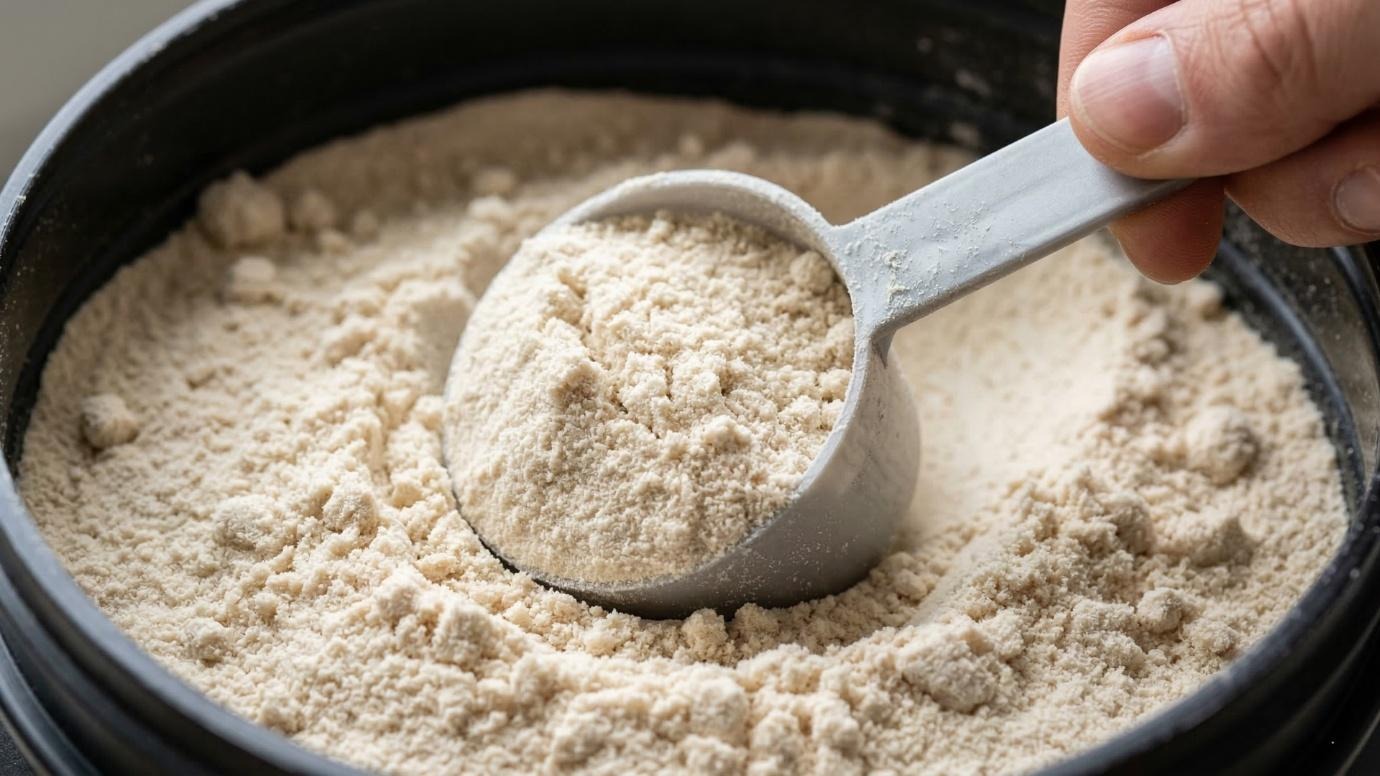
Protein powder is a concentrated source of dietary protein, typically derived from dairy, eggs, or plants. Most products provide 20–25g of protein per serving, making them a convenient way to boost protein intake without adding excessive calories.
The market offers dozens of options, but they generally fall into three main categories.
Dairy-based protein powders:
Plant-based proteins:
Egg-based protein:
When checking labels, look beyond protein content. Many products contain added sugar, sweeteners, thickeners, and sometimes caffeine or other key ingredients that affect both calories and how you feel after drinking them.
Can protein powder help with weight loss and belly fat?
No powder will “melt belly fat” that’s marketing fiction. However, protein powder can contribute to overall body fat reduction, including around the waist, when used correctly.
The mechanism isn’t magic; it’s metabolic. Higher protein intake reduces hunger hormones and increases satiety signals, which leads to fewer spontaneous calories consumed throughout the day. In one 12-week randomised controlled trial, participants taking a whey protein supplement before meals lost 2.81kg of fat compared to 1.62kg in the control group. The protein group also maintained more muscle, achieving a fat-to-lean loss ratio of 3.75:1 versus 1.05:1 in controls.
What the research shows:
What this means practically:
Which type of protein powder is best for weight loss?
The “best” protein powder is one that fits your calorie and macro targets, digests well without discomfort, and matches your dietary preferences.
That said, some options are better suited for weight management than others.
Whey protein:
Casein protein:
Plant-based blends (pea + rice):
Weight-loss selection criteria:
| Factor | What to Look For |
|---|---|
| Protein per serving | 20g or more |
| Calories per serving | Under 150 (ideally under 130) |
| Added sugar | Under 3g |
| Fat content | Under 3g |
| Fibre | Bonus if present |
| Sweeteners | Check tolerance (some cause bloating) |
For weight loss specifically, milk based protein powder (whey or casein) and well-formulated plant blends perform similarly when protein content is matched. Choose based on digestion, taste, and dietary restrictions rather than marketing claims.
When should you take protein powder for weight loss?
Total daily protein matters far more than exact timing. However, strategic timing can help with hunger control and adherence.
Morning use:
Between meals:
Pre- or post-workout:
Before bed (casein):
The bottom line: fit protein shakes where they solve a problem, whether that’s morning convenience, afternoon hunger, or post-gym recovery.
How to use protein shakes in a weight-loss plan
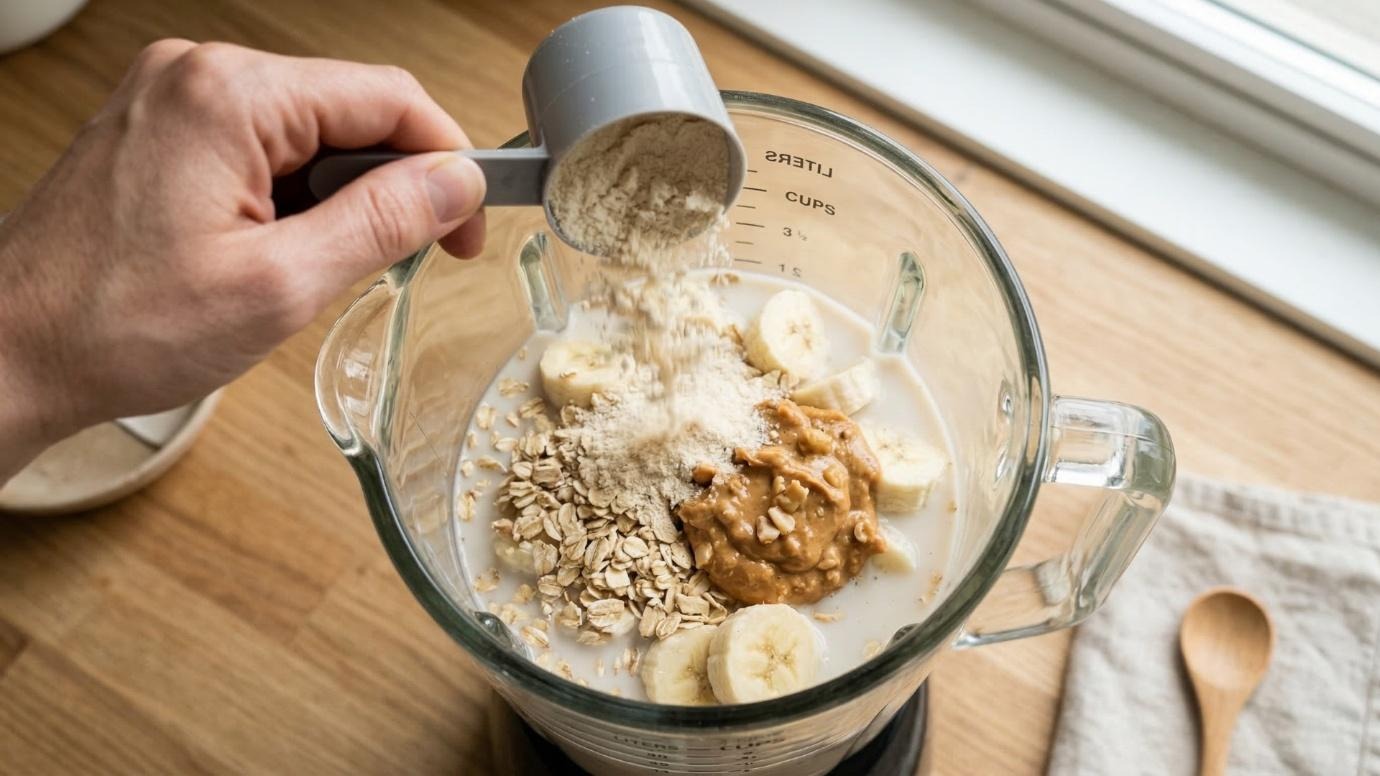
Protein shakes work best when they have a defined role in your overall eating pattern rather than being added randomly.
Ways to incorporate shakes:
Build-a-shake templates:
| Goal | Recipe | Approximate Calories |
|---|---|---|
| Low-calorie | 1 scoop powder + water | 100–130 |
| Moderate | 1 scoop + plant based milk + handful spinach | 160–200 |
| Meal replacement | 1 scoop + milk + banana + 1 tbsp nut butter + oats | 350–450 |
Tips for better results:
Long-term success requires learning to build satisfying whole food meals. Shakes are a bridge, not a destination.
Is protein powder safe for weight loss?
For most healthy adults, reputable protein powders are safe when used within daily protein needs and total calorie goals.
Safety considerations:
Who should check with a healthcare professional first:
How much is too much?
For most people, protein intake from all sources (food plus supplements) should stay below 2.2g/kg body weight unless supervised by a registered dietitian or physician. More protein isn’t always better—beyond a certain threshold, extra protein is simply extra calories.
Limitations of protein powder versus whole foods

Protein powder solves one problem, hitting protein targets conveniently. It doesn’t replace the broader benefits of a nutritious diet built on whole foods.
What powders often lack:
Equally convenient high-protein foods:
Most people should aim to get the majority of their protein from whole foods, using powder as a supplement to fill gaps rather than the primary source of protein intake.
The satisfaction factor:
Chewing food triggers satiety signals that liquids don’t fully activate. People who drink most of their calories often report feeling hungrier than those who eat the same amount of protein from solid protein sources. For sustainable weight management, shakes work best as occasional additions rather than dietary foundations.
How much protein powder should you use when losing weight?
A simple guideline: 1–2 scoops per day (roughly 20–50g protein from powder) is sufficient for most people, assuming the remainder comes from food.
Calculating your daily protein target:
Example calculation:
| Factor | Value |
|---|---|
| Body weight | 75kg |
| Target range | 120–165g protein daily |
| Protein from meals | ~100g |
| Gap to fill | 20–65g |
| Scoops needed | 1–2 |
Warning signs you’re overdoing it:
Track your intake for one week using a food diary or nutrition app. This reveals whether protein powder genuinely helps you meet goals or simply adds more calories to an already sufficient diet.
Replacing all meals with shakes is not recommended except in short-term, medically supervised programmes. For overall health and metabolism, your body needs nutrients from varied foods that no single powder can provide.
Putting it all together: protein powder as part of a sustainable weight-loss strategy
Protein powder is a helpful tool for hitting protein goals, staying fuller, and protecting lean muscle during weight loss. But it only works when combined with overall calorie control, a healthy diet, and regular movement.
The sustainable approach:
Practical next steps:
If you’re unsure how to integrate protein powder into an individualised fat-loss plan, consulting a registered dietitian or qualified nutrition professional can provide personalised guidance based on your health history, preferences, and goals.
The goal isn’t to drink protein shakes forever. It’s to learn eating patterns that promote weight loss maintenance long after the powder runs out.
Protein powder can support weight loss by helping increase daily protein intake, promoting feelings of fullness, and helping preserve muscle mass during calorie restriction. However, it works best when combined with a balanced diet and regular exercise.
The best protein powder for weight loss is one that provides high-quality protein with minimal added sugars and unnecessary calories. Products that support satiety and fit within your overall nutrition plan are generally the most effective.
Protein requirements vary depending on age, activity level, and body composition goals. Many studies suggest consuming approximately 1.2–2.0 grams of protein per kilogram of body weight may help support weight management and muscle preservation during weight loss.
Disclaimer
This article is for general informational purposes only and does not replace personalised medical advice. Feeding decisions should always be made in consultation with a qualified healthcare provider. Every baby is unique, and individual circumstances may vary.
Join The Hub community. Subscribe today and receive a monthly email with our newest blogs and articles on health, wellness, and nutrition to keep you informed and inspired.
By signing up you agree to our User Agreement and Privacy Policy & Cookie Statement


Newsletter
By signing up you agree to our User Agreement and Privacy Policy & Cookie Statement
By accessing, browsing, or using this website (the “www.newimage.world/thehub”), you acknowledge and agree to the terms of this Disclaimer. The Website, including its blogs, podcasts, videos, and any other content (collectively, the “Content”), is operated by New Image™ International (“the Company,” “we,” “our,” or “us”).
All Content made available on this Website is provided strictly for general informational and educational purposes only. The Content does not constitute, and should not be relied upon as, medical advice, diagnosis, treatment, prescription, or professional health consultation of any kind.
The Company makes no representations or warranties regarding the accuracy, completeness, reliability, or timeliness of the Content. The Content may include information collected from external or third-party sources, and we do not independently verify such information. Accordingly, no nutritional, health, or wellness claims are endorsed, warranted, or guaranteed by the Company.
To the fullest extent permitted by applicable law:
Your use of the Website does not establish any doctor–patient, nutritionist–client, or other professional relationship between you and the Company or any of its representatives.
The Website may include references, links, or access to third-party websites, podcasts, or resources. The Company does not control, endorse, or assume any responsibility for such third-party content and shall not be held liable for any damages arising from your use of or reliance on it.
By clicking “Accept” on the Website’s pop-up disclaimer, you expressly acknowledge that you have read, understood, and agreed to be bound by this Disclaimer. Your continued use of the Website constitutes ongoing acceptance of these terms. If you no longer agree with this Disclaimer, you must immediately discontinue use of the Website.
Join The Hub community. Subscribe today and receive a monthly email with our newest blogs and articles on health, wellness, and nutrition to keep you informed and inspired.
By signing up you agree to our User Agreement and Privacy Policy & Cookie Statement











.webp)
.webp)