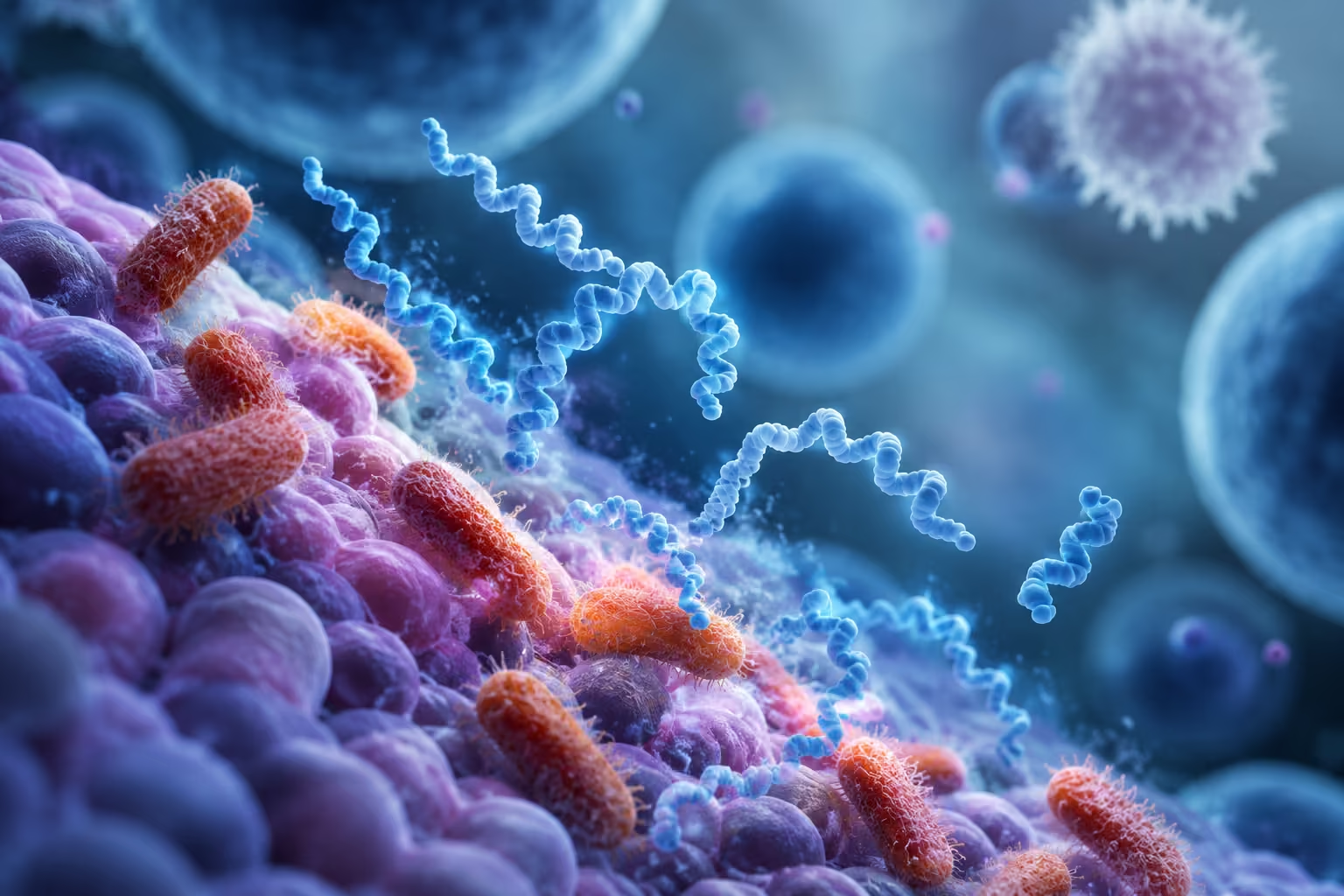
The human body contains several natural defence systems that help maintain balance and support general wellbeing. Among these systems, antimicrobial peptides have attracted growing scientific attention because of their broad role in the innate immune response and their interaction with harmful microorganisms. These naturally occurring molecules are found across many forms of life, including plants, animals, and microorganisms, and are considered foundational components of biological defence systems.
Current research suggests that antimicrobial peptides amps act as rapid-response molecules that interact with bacteria, fungi, and certain viruses. These peptides are often referred to as host defense peptides because they contribute to the body’s natural protective processes while also supporting communication between immune cells and tissues.
Most cationic antimicrobial peptides contain between 6 and 60 amino acid residues and usually possess a positive net charge. This characteristic allows them to interact with negatively charged microbial surfaces, especially the microbial cell membrane and bacterial cell membranes. Their structure commonly includes both positively charged regions and hydrophobic residues, enabling interactions with the lipid bilayer of microorganisms.
Scientific databases such as the antimicrobial peptide database catalogue thousands of naturally occurring and synthetic peptide sequences. Researchers continue to study the amino acid sequence, amino acid composition, and secondary structures of these molecules to better understand their mechanism of action and biological roles.
Many naturally occurring peptides are grouped into specialised categories. These include host defense peptides, defensins, cathelicidins, bacteriocins, linear peptides, and cyclic peptides. While some are produced by microorganisms to inhibit competing microbes, others are generated by animals and plants as part of innate immunity. Certain peptides are also classified as anionic peptides, although positively charged peptides remain the most extensively studied.
Research indicates that antimicrobial peptides can be classified according to their biological source, structure, and target organisms. Some peptides show activity against gram positive bacteria, while others interact with gram negative bacteria, including organisms such as escherichia coli and listeria monocytogenes. Investigators also study peptide interactions with positive and gram negative bacterial groups to evaluate broad-spectrum activity.
The natural production of antimicrobial peptide genes occurs in various tissues throughout the body. Epithelial cells, including respiratory epithelial cells, are important sources of these peptides because they line surfaces frequently exposed to environmental microorganisms. The skin, digestive tract, and respiratory system are among the areas where peptides help support the body’s interaction with microbes.
In recent years, scientific interest has expanded because many peptides demonstrate antimicrobial properties while also participating in immune regulation. Researchers have observed that some peptides may influence signalling pathways such as NF-κB, MAPK, and PI3K, which are associated with cellular communication and immune activity. These pathways can influence immune response, dendritic cell differentiation, and leukocyte recruitment.
One well-known peptide, LL-37, has been widely studied for its immunomodulatory activity. Current evidence suggests that LL-37 can bind bacterial components such as lipopolysaccharides, potentially moderating excessive stimulation of immune pathways. Studies also indicate that it may influence the production of chemokines linked to the recruitment of immune cells.
As scientific understanding evolves, antimicrobial peptides are increasingly being examined as possible alternatives or complementary approaches alongside conventional antibiotics. Their broad interaction with microbial structures and relatively complex modes of action have contributed to ongoing interest in their role within modern research on antimicrobial resistance and microbial adaptation.
One of the most studied aspects of antimicrobial peptides is their interaction with microbial surfaces. Many peptides act directly on the cell membrane, particularly the negatively charged surfaces found in bacterial organisms. The outer structure of bacteria differs significantly from mammalian cells, allowing selective interactions to occur.
Most bacteria possess membrane components such as phosphatidylglycerol and cardiolipin, which contribute to the negative charge of the cytoplasmic membrane. By contrast, mammalian membranes contain cholesterol, which stabilises membrane structure and may reduce peptide interaction. This distinction contributes to the selective behaviour often observed with cationic peptide activity.
The mechanism of action of antimicrobial peptides is generally divided into membranolytic and non-membranolytic categories. Membranolytic peptides directly affect the bacterial cell membrane, while non-membrane-active peptides may interact with intracellular components such as nucleic acid or proteins.
Researchers have identified several models describing how peptides disrupt microbial membranes. In the barrel-stave model, peptides insert into the membrane and align to form channels. In the toroidal pore model, peptides bend the membrane inward to create pores. Other peptides act through detergent-like disruption that destabilises the lipid bilayer entirely. These processes can result in pore formation, leakage of intracellular material, and altered membrane stability.
Some peptides target the bacterial cell wall or interfere with processes linked to cell wall synthesis and protein synthesis. Others cross the membrane without causing lysis and interact directly with DNA or RNA. Through these intracellular actions, peptides may influence microbial metabolism and replication pathways.
Research involving active peptides has demonstrated activity against organisms associated with bacterial infections, including methicillin resistant staphylococcus aureus and various strains of pathogenic bacteria. Investigators frequently evaluate peptide effectiveness through measurements such as the minimum inhibitory concentration, which estimates the amount needed to inhibit microbial growth under laboratory conditions.
The diversity of peptide structures contributes to varied biological functions. Some peptides are short and highly flexible, while others possess rigid conformations stabilised by disulphide bonds. Linear peptides may adopt helical forms when interacting with membranes, whereas cyclic peptides often display enhanced structural stability and improved proteolytic resistance.
The arrangement of amino acid residues strongly influences peptide behaviour. Positively charged residues contribute to electrostatic attraction toward microbial surfaces, while hydrophobic interactions enable penetration into membrane structures. The balance between charge and hydrophobicity is considered critical for selective microbial targeting.
Although many peptides show broad antibacterial activity, bacteria can sometimes adapt through mechanisms associated with resistance to antimicrobial peptides. Scientific studies have observed that microbes may alter membrane composition, reduce membrane charge, or produce proteolytic enzymes capable of degrading peptides. Some microorganisms also modify transport systems or increase biofilm formation to reduce peptide exposure.
Despite these adaptations, current research suggests that the development of widespread bacterial resistance to AMPs may occur less readily than resistance associated with some conventional antibiotics. This is partly because many peptides interact with multiple microbial targets simultaneously rather than focusing on a single high-affinity molecular target.
At the same time, researchers caution that extensive use of pharmaceutical peptide copies could potentially influence microbial adaptation over time. Ongoing monitoring and careful evaluation therefore remain important areas within peptide research.
Although antimicrobial peptides were initially studied mainly for their interactions with microbes, research now suggests that their biological functions extend beyond direct antimicrobial activity. Many host defense peptides appear to participate in signalling processes that influence communication between tissues and the immune system.
The innate immune system relies on rapid responses to environmental challenges, and antimicrobial peptides contribute to these early defence mechanisms. Immune cells, epithelial cells, and host cells can release peptides in response to microbial exposure or tissue stress. These peptides may then influence surrounding cellular activity through signalling pathways and chemokine production.
Current evidence indicates that some peptides can regulate inflammatory balance by influencing proinflammatory cytokines and anti-inflammatory mediators. Certain studies involving LL-37 and related peptides have observed modulation of TNF-α activity and altered chemokine expression. Researchers have also noted peptide involvement in the recruitment of leukocytes through molecules such as IL-8 and MCP-1.
Defensins and cathelicidins are among the most widely studied peptide families. Defensins are especially important in lung and mucosal defence, while cathelicidins have been associated with broader immune regulation. These peptides are produced by several cell types, including respiratory epithelial cells, neutrophils, and macrophages.
Scientific investigations have also explored the relationship between antimicrobial peptides and tissue repair. Some peptides appear capable of supporting cell migration, blood vessel formation, and tissue regeneration processes linked to wound healing. An emerging role has been observed in maintaining skin integrity and supporting normal recovery processes after tissue disruption.
In addition to bacterial interactions, several peptides have demonstrated antiviral and antifungal properties in laboratory research. Because of these broad biological roles, some researchers increasingly refer to AMPs as host-defense peptides rather than solely antimicrobial molecules.
Studies have further explored peptide interactions in areas such as neurology, metabolic regulation, and cellular communication. Certain peptides have shown anticancer properties under experimental conditions, although this field remains under investigation and continues to require careful evaluation.
The relationship between peptides and microbial communities is also an area of interest. Rather than acting solely as destructive molecules, some peptides may contribute to microbial balance by selectively interacting with particular organisms while supporting overall ecosystem stability within the body.
Researchers studying antibacterial peptide activity often conduct functional analysis to identify how specific peptide structures influence biological behaviour. The arrangement of the peptide chain, charge distribution, and folding pattern can significantly affect biological interactions.
Modern peptide engineering techniques also allow scientists to create synthetic peptides with modified structures designed to improve stability or targeting. Modifications to amino acid composition may enhance resistance to degradation or alter membrane selectivity.
At present, scientists continue to investigate how peptide interactions differ between microbial membranes and healthy human tissues. The selectivity of AMPs for bacteria over mammalian cells remains a major area of study because maintaining balance between microbial targeting and tissue compatibility is considered important for future applications.
Interest in antimicrobial peptides has expanded across several scientific and industrial fields. Researchers are examining their possible use in healthcare, agriculture, food preservation, biotechnology, and veterinary settings because of their broad biological activity and natural origins.
Several production approaches are currently used to generate AMPs. One widely applied method is chemical synthesis, particularly solid-phase peptide synthesis. This technique allows controlled assembly of the peptide chain and precise adjustment of the amino acid sequence. Scientists can modify peptide length, charge, and hydrophobicity to study structure-function relationships and optimise antimicrobial efficacy.
Another important approach involves enzymatic hydrolysis. During this process, proteins derived from milk, plants, fish, or other natural materials are broken down using enzymes to release smaller active peptides. This method is often explored as a more sustainable production pathway.
Large-scale production may also involve recombinant DNA technology. Recombinant systems can help generate peptides that require specialised folding or post-translational modifications. Research into ribosomally synthesized peptides has contributed significantly to understanding natural peptide biosynthesis and industrial production strategies.
Despite growing scientific interest, several challenges continue to affect practical application. Many peptides display limited stability because they can be rapidly degraded by proteolytic enzymes within biological environments. Low bioavailability and high manufacturing costs are also widely discussed concerns.
Current estimates suggest that producing a peptide of approximately 5000 Da may cost substantially more than producing a conventional small-molecule compound. These economic considerations contribute to ongoing efforts to improve manufacturing efficiency and peptide stability.
Although laboratory research continues to expand rapidly, only a relatively small number of AMPs have progressed into clinical trials, including limited examples reaching phase iii clinical trials. Researchers frequently note the gap between promising laboratory findings and large-scale practical implementation.
Nevertheless, ongoing investigations continue to explore possible applications in several sectors. Some AMPs are incorporated into coatings for medical devices to reduce microbial colonisation through contact-killing effects. Others are being examined for use in topical formulations designed to support skin balance and cleanliness.
In agriculture, AMPs are being investigated as environmentally conscious biopesticides. Transgenic crops engineered to express protective peptides may potentially support resistance against plant pathogens while reducing reliance on synthetic chemical agents. Researchers are also examining peptide applications in livestock management to support microbial balance and reduce dependence on traditional antibiotics.
The food sector represents another area of growing interest. Certain peptides can help reduce microbial contamination in food systems and packaging materials. Some compounds may contribute to shelf-life extension by limiting microbial colonisation in active packaging technologies. Nisin, a naturally derived peptide, is widely recognised for its use in food preservation applications.
Research involving pathogenic microorganisms has also highlighted the possible value of peptides against antibiotic resistant infections. Current investigations suggest that AMPs may interact with multidrug-resistant organisms through mechanisms distinct from many existing drugs.
Because of these broad applications, peptides are increasingly viewed as multifunctional biological molecules rather than simple antimicrobial compounds. Their diverse activities, including immunomodulatory and signalling functions, continue to attract interest across multiple scientific disciplines.
The growing interest in antimicrobial peptides reflects broader scientific efforts to understand natural defence systems and microbial interactions. As research progresses, AMPs are increasingly recognised as complex biological molecules involved in both microbial balance and immune communication.
One major area of focus involves overcoming technical limitations associated with peptide stability and delivery. Researchers continue exploring ways to improve proteolytic resistance, increase bioavailability, and reduce manufacturing costs. Structural modifications, nanoformulations, and hybrid peptide systems are among the approaches under investigation.
The study of cationic antimicrobial peptides also contributes to understanding microbial evolution and adaptation. Scientists are examining how bacteria alter membrane charge, transport systems, and enzymatic pathways to develop partial resistance mechanisms. Monitoring these changes remains important because peptide overuse could theoretically influence microbial ecology over time.
Advances in bioinformatics and peptide sequencing technologies are accelerating peptide discovery. Modern computational tools and resources such as the antimicrobial peptide database allow researchers to compare sequences, evaluate structural features, and predict biological activity more efficiently than in previous decades.
There is also growing interest in tailoring peptides for specialised functions. Modified synthetic peptides may be designed to target specific microbial groups, enhance stability, or improve compatibility with human tissues. Investigators are evaluating how peptide charge, hydrophobicity, and structural folding affect selectivity toward microbial membranes versus healthy cells.
Research into immunomodulatory activity continues to expand as well. Scientists are exploring how peptides influence cellular signalling pathways, leukocyte migration, and inflammatory balance. These investigations may contribute to a broader understanding of how innate defence systems interact with environmental stressors and microbial exposure.
The role of AMPs in maintaining general wellbeing has become an important topic in biological science. Their interactions with the skin, respiratory tract, digestive surfaces, and immune system suggest a broad contribution to physiological balance. Emerging evidence also supports their relevance within food science, agricultural sustainability, and microbial management strategies.
Current research suggests that antimicrobial peptides may remain an important area of scientific exploration for years to come. While many questions remain regarding stability, scalability, and long-term application, these naturally occurring molecules continue to provide valuable insight into how living organisms interact with the microbial world.
This article is intended for general educational and informational purposes only. It does not provide medical, diagnostic, or professional advice. Current research on antimicrobial peptides continues to evolve, and interpretations may change as new evidence emerges. Individuals seeking guidance relating to health or wellbeing should consult an appropriately qualified professional.

Join The Hub community. Subscribe today and receive a monthly email with our newest blogs and articles on health, wellness, and nutrition to keep you informed and inspired.
By signing up you agree to our User Agreement and Privacy Policy & Cookie Statement


Newsletter
By signing up you agree to our User Agreement and Privacy Policy & Cookie Statement
By accessing, browsing, or using this website (the “www.newimage.world/thehub”), you acknowledge and agree to the terms of this Disclaimer. The Website, including its blogs, podcasts, videos, and any other content (collectively, the “Content”), is operated by New Image™ International (“the Company,” “we,” “our,” or “us”).
All Content made available on this Website is provided strictly for general informational and educational purposes only. The Content does not constitute, and should not be relied upon as, medical advice, diagnosis, treatment, prescription, or professional health consultation of any kind.
The Company makes no representations or warranties regarding the accuracy, completeness, reliability, or timeliness of the Content. The Content may include information collected from external or third-party sources, and we do not independently verify such information. Accordingly, no nutritional, health, or wellness claims are endorsed, warranted, or guaranteed by the Company.
To the fullest extent permitted by applicable law:
Your use of the Website does not establish any doctor–patient, nutritionist–client, or other professional relationship between you and the Company or any of its representatives.
The Website may include references, links, or access to third-party websites, podcasts, or resources. The Company does not control, endorse, or assume any responsibility for such third-party content and shall not be held liable for any damages arising from your use of or reliance on it.
By clicking “Accept” on the Website’s pop-up disclaimer, you expressly acknowledge that you have read, understood, and agreed to be bound by this Disclaimer. Your continued use of the Website constitutes ongoing acceptance of these terms. If you no longer agree with this Disclaimer, you must immediately discontinue use of the Website.
Join The Hub community. Subscribe today and receive a monthly email with our newest blogs and articles on health, wellness, and nutrition to keep you informed and inspired.
By signing up you agree to our User Agreement and Privacy Policy & Cookie Statement
















.webp)
.webp)