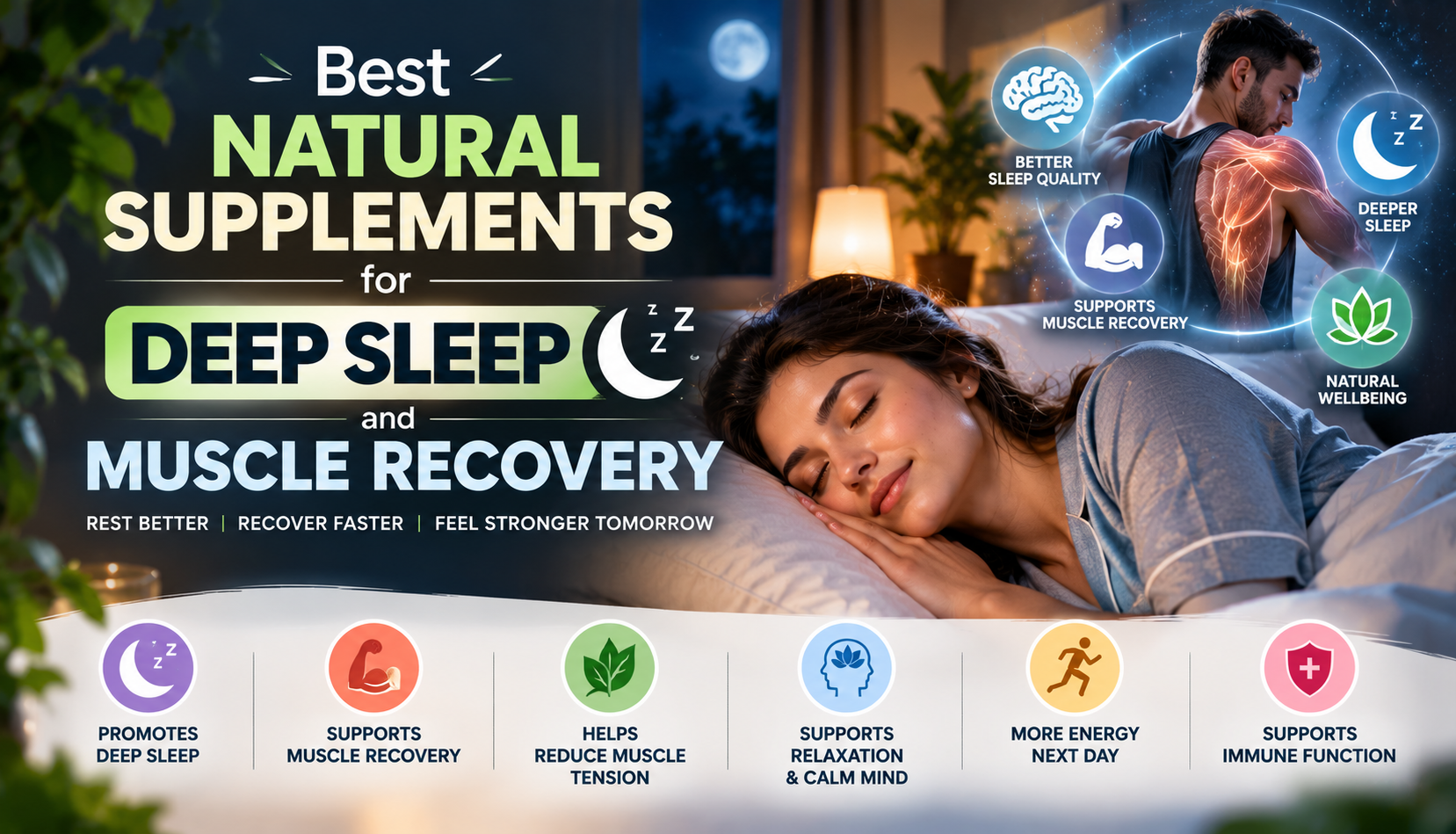
Good sleep and physical recovery are closely connected. During the night, the body enters different stages of sleep, including slow wave sleep, a deeper stage associated with physical restoration. For people who exercise regularly, sleep can also form an important part of muscle recovery, alongside adequate nutrition, hydration and sensible training.
When difficulty falling asleep, frequent waking or stress affects sleep quality, some people consider natural supplements for deep sleep. Options such as magnesium, L-theanine, tart cherry products, glycine and omega-3 fatty acids have received research interest.
However, supplements are not a replacement for healthy sleep habits or a balanced diet. Their effects can vary between individuals, and current research does not support treating them as guaranteed solutions.
During deep sleep, the body carries out several processes associated with physical restoration. Deep sleep promotes muscle repair and protein synthesis, while sleep also supports the release of growth hormones involved in normal tissue maintenance.
Sleep deprivation can increase stress levels and inflammatory activity. Research has also reported reductions in muscle protein synthesis following insufficient sleep, with one study reporting an approximately 18% reduction.
For athletes, adequate sleep time is particularly relevant. Teen athletes may need at least eight hours nightly, while adults involved in demanding training may benefit from around eight to ten hours of sleep after particularly strenuous exercise.
Quality sleep can therefore complement nutrition and training when supporting muscle tissue, energy levels and general wellbeing.
Magnesium is one of the most commonly discussed nutrients for magnesium sleep support.
Magnesium contributes to normal nervous system and muscle function. Some research suggests that adequate magnesium may support relaxation and sleep quality, particularly when dietary intake is insufficient.
Magnesium is involved in pathways associated with GABA, an inhibitory neurotransmitter involved in nervous-system signalling. This is one reason magnesium is often discussed in relation to relaxation and nighttime rest.
Popular forms include magnesium glycinate and magnesium L-threonate. However, the evidence for specific forms and their effects on sleep remains developing.
Some people take magnesium approximately 30–60 minutes before bedtime, although the appropriate timing can vary.
L-theanine is an amino acid naturally found in tea leaves and is often included in supplement routines focused on relaxation.
Research suggests that L-theanine may influence neurotransmitters including GABA, serotonin and dopamine. This has led to interest in its potential role in relaxation and nighttime stress.
For people whose sleep-related issues are connected with an active mind or difficulty switching off, L-theanine may be considered as part of a broader bedtime routine.
However, responses differ, and more research is needed to establish its role in consistently supporting deep and restful slumber.
Tart cherries are a natural food source containing small amounts of melatonin and tryptophan. Melatonin is involved in signalling the body that it is time to sleep and helping regulate circadian rhythms.
Tart cherry juice has also been studied in relation to exercise recovery. Some research suggests it may be associated with reduced muscle soreness following demanding exercise.
This makes tart cherry products an interesting nutritional option when looking at multiple aspects of sleep and muscle recovery. However, research findings vary, and they should not be viewed as a guaranteed solution for sleep or recovery.
Glycine is an amino acid that participates in several processes within the body. Research has examined its relationship with sleep, including its potential influence on body temperature.
Lowering core body temperature is a normal part of preparing for sleep. Some research suggests glycine may help support this process and potentially encourage slow wave sleep.
The evidence remains limited, so glycine is best considered one potential component of a wider supplement routine, rather than a standalone approach.
Omega-3 fatty acids are found in foods such as oily fish and certain plant sources. They are widely studied for their role in general nutrition and normal cellular function.
Research involving exercise has investigated whether omega-3 intake may influence perceived muscle soreness and inflammatory responses following physical activity.
Some findings suggest omega-3 fatty acids may help support recovery following exercise, although results are not consistent across every study.
Including omega-3-rich foods within a balanced diet can therefore be a practical nutritional choice. Supplements may be considered when dietary intake is limited, with individual needs taken into account.
Protein provides the building blocks required for maintaining and repairing muscle tissue.
Casein is a slowly digested milk protein, and consuming a casein protein shake before bed has been studied for its potential effect on overnight muscle protein synthesis.
Some research suggests that pre-sleep protein can provide amino acids during the overnight period, particularly following resistance exercise.
For people who already consume sufficient protein through meals, additional supplementation may not be necessary. A balanced diet should remain the foundation of nutrition for muscle recovery.
Some sleep formulas contain ingredients such as ashwagandha, apigenin or phosphatidylserine.
Ashwagandha has been studied for its relationship with the body's stress response and cortisol levels. Apigenin is a flavonoid found naturally in several plants and has been researched for its interaction with nervous-system pathways. Phosphatidylserine has also been studied in relation to evening cortisol patterns.
These ingredients are sometimes marketed as supporting relaxation, but evidence varies considerably.
The phrase “formula addresses multiple aspects” can therefore be misleading if it suggests guaranteed results. A supplement containing several ingredients is not automatically more appropriate for every individual.
When considering natural supplements for deep sleep, it is useful to first look at lifestyle factors.
Helpful habits can include:
These habits can provide a foundation for restorative sleep without relying entirely on supplements.
Dietary supplements can vary in ingredients, dosage and quality. Some products may contain more ingredients than expected, while labels may differ in how clearly they describe amounts.
Third-party testing can provide additional information about purity and accurate dosing, although it does not guarantee that a product will produce a particular result.
Melatonin, for example, may cause side effects such as daytime drowsiness or vivid dreams in some people. Magnesium can also cause digestive effects at higher intakes.
People taking medicines, managing health conditions, pregnant or breastfeeding individuals, and those with persistent sleep disturbances should speak with a qualified healthcare professional before starting a new supplement routine.
Sleep should be considered alongside nutrition, exercise and recovery habits.
Adequate protein provides the building blocks required for normal muscle maintenance. Regular movement supports physical health, while appropriate rest allows the body to recover between training sessions.
Sleep deprivation can increase fatigue and make normal exercise feel more demanding. Chronic insufficient sleep may also influence stress and energy levels.
For this reason, a peaceful bedtime routine, adequate nutrition and sensible training load can all contribute to a more complete approach to recovery.
There is no single supplement that guarantees complete deep sleep or eliminates muscle soreness.
Instead, consider a layered approach:
During the day: Eat balanced meals, stay hydrated and remain physically active.
After exercise: Consume sufficient protein and carbohydrates according to your individual needs.
Before bed: Reduce stimulation, practise relaxation and maintain a consistent sleep schedule.
Supplements: Consider nutrients or ingredients such as magnesium, omega-3 fatty acids, tart cherry or other options only when they fit your dietary needs and personal circumstances.
This approach can help ensure supplements complement healthy habits rather than replace them.
The search for natural supplements for deep sleep often centres on magnesium, L-theanine, tart cherry, glycine, omega-3 fatty acids and selected protein sources.
Current research suggests that these nutrients and compounds may have roles in relaxation, sleep quality or muscle recovery, but the evidence differs between ingredients.
Deep sleep is associated with physical restoration and normal muscle protein synthesis, while sufficient protein, regular exercise and appropriate recovery support muscle tissue maintenance.
A supplement routine should therefore be viewed as one part of a broader lifestyle that includes nutritious food, adequate sleep, stress management and sensible exercise.
This article is provided for general educational and informational purposes only. It does not replace personalised advice from a qualified healthcare professional. Supplement suitability, dosage and potential interactions can vary between individuals. Anyone with a health condition, taking medication, pregnant or breastfeeding should seek appropriate professional advice before using dietary supplements.

Join The Hub community. Subscribe today and receive a monthly email with our newest blogs and articles on health, wellness, and nutrition to keep you informed and inspired.
By signing up you agree to our User Agreement and Privacy Policy & Cookie Statement


Newsletter
By signing up you agree to our User Agreement and Privacy Policy & Cookie Statement
By accessing, browsing, or using this website (the “www.newimage.world/thehub”), you acknowledge and agree to the terms of this Disclaimer. The Website, including its blogs, podcasts, videos, and any other content (collectively, the “Content”), is operated by New Image™ International (“the Company,” “we,” “our,” or “us”).
All Content made available on this Website is provided strictly for general informational and educational purposes only. The Content does not constitute, and should not be relied upon as, medical advice, diagnosis, treatment, prescription, or professional health consultation of any kind.
The Company makes no representations or warranties regarding the accuracy, completeness, reliability, or timeliness of the Content. The Content may include information collected from external or third-party sources, and we do not independently verify such information. Accordingly, no nutritional, health, or wellness claims are endorsed, warranted, or guaranteed by the Company.
To the fullest extent permitted by applicable law:
Your use of the Website does not establish any doctor–patient, nutritionist–client, or other professional relationship between you and the Company or any of its representatives.
The Website may include references, links, or access to third-party websites, podcasts, or resources. The Company does not control, endorse, or assume any responsibility for such third-party content and shall not be held liable for any damages arising from your use of or reliance on it.
By clicking “Accept” on the Website’s pop-up disclaimer, you expressly acknowledge that you have read, understood, and agreed to be bound by this Disclaimer. Your continued use of the Website constitutes ongoing acceptance of these terms. If you no longer agree with this Disclaimer, you must immediately discontinue use of the Website.
Join The Hub community. Subscribe today and receive a monthly email with our newest blogs and articles on health, wellness, and nutrition to keep you informed and inspired.
By signing up you agree to our User Agreement and Privacy Policy & Cookie Statement



















.webp)
.webp)