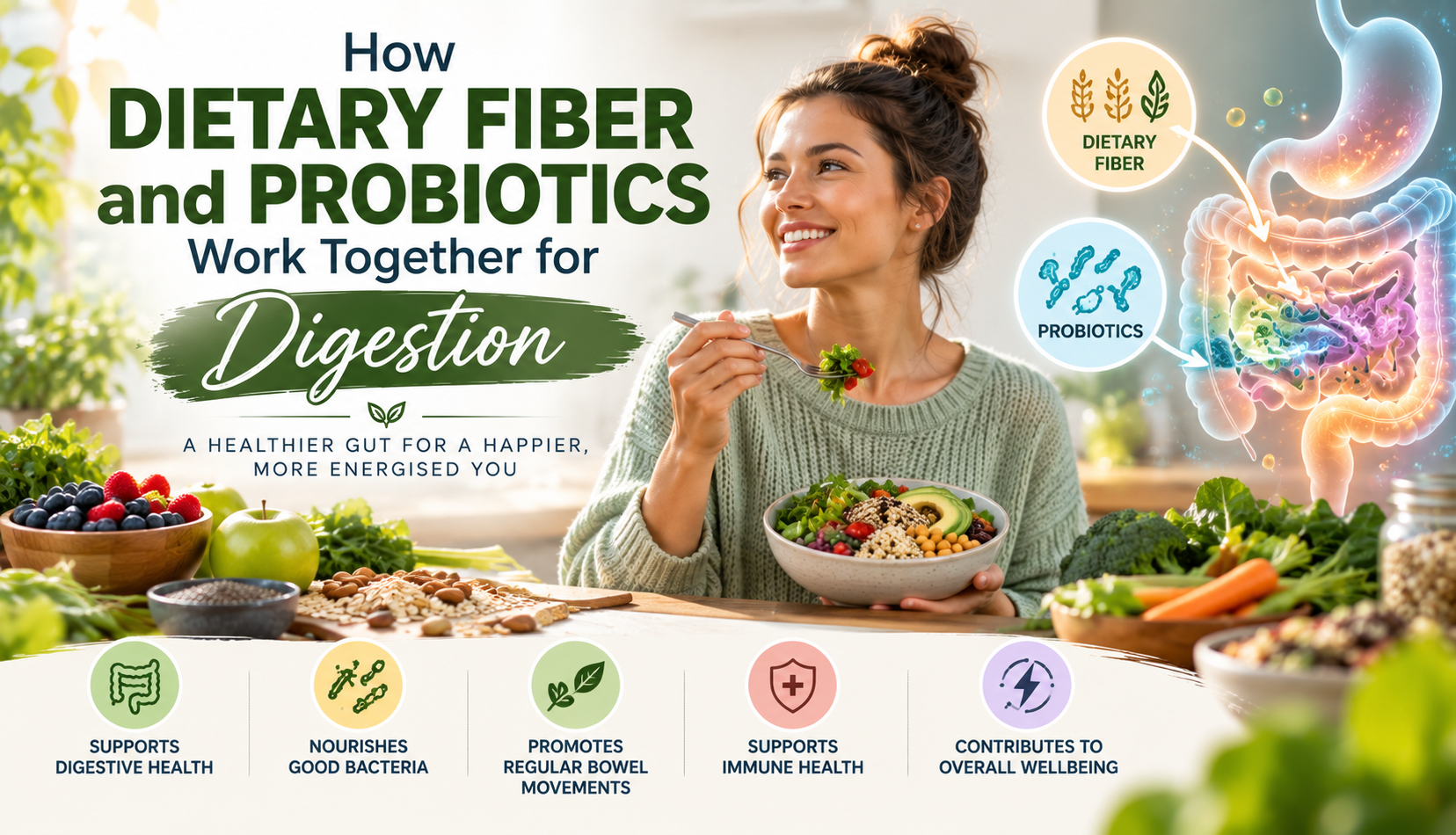
Digestion is influenced by what we eat, how regularly we eat, hydration, physical activity and the microorganisms living throughout the digestive tract. Two nutritional components that often appear in conversations about dietary fiber for digestion are dietary fibre and probiotics.
Dietary fibre is a non-digestible carbohydrate found naturally in plant foods. Probiotics are live microorganisms that can be consumed through certain foods or probiotic supplements. While they are different, both can interact with the gut environment in complementary ways.
A balanced diet containing a variety of plant foods can provide different types of fibre, while selected fermented foods can provide live microorganisms. Understanding how these components work can help people make practical choices for digestive health, gut health and overall nutrition.
Dietary fibre is a type of carbohydrate that the body does not fully digest. Instead, different forms of fibre travel through the digestive system and can influence stool consistency, digestion and the gut microbiome.
Whole grains, legumes, vegetables and fruits are primary sources of dietary fibre. Nuts and seeds can also contribute useful amounts.
Most adults do not consume enough fibre. Some estimates suggest that only around 4 in 100 adults meet recommended intake levels, highlighting the importance of including more fibre-rich foods in everyday meals.
For general nutrition, adults are often advised to aim for approximately 25–38 grams of fibre daily, with around 25–30 grams commonly used as a practical target.
There are two broad types of dietary fibre: soluble fibres and insoluble fibre.
Soluble fibre dissolves in water and can form a gel-like substance. Some viscous fibres can slow the movement and absorption of certain nutrients, which may influence blood glucose levels after meals.
Insoluble fibre does not dissolve in water in the same way. It can add bulk to stool and support regular bowel movements.
Many foods contain a mixture of fibre types, so eating a varied diet is generally more useful than focusing on one type alone.
One of the key roles of fibre is supporting normal bowel function.
Insoluble fibre can add bulk to stool, while some fibres absorb water and help soften stool. Together, these characteristics can support regular bowel movements.
Fibre also reaches the large intestine, where certain types can be fermented by gut bacteria.
This means dietary fibre for digestion is relevant not only to stool consistency but also to the wider gut environment.
People who suddenly add large amounts of fibre may experience bloating, stomach cramps or other digestive discomfort. Gradually increasing fibre intake can make the transition easier for many people.
There are many ways to increase fibre intake through ordinary foods.
Useful options include:
Legumes are particularly useful because they can provide both soluble and insoluble fibre.
For example, breakfast could include a whole grain cereal with fruit and seeds. Lunch might include beans or lentils with vegetables, while dinner could feature brown rice alongside vegetables and another source of protein.
These simple changes can increase fibre without requiring a complicated eating plan.
Probiotics are live microorganisms consumed through certain foods or probiotic supplements.
Some fermented foods contain live microorganisms, although not every fermented food necessarily contains probiotics in meaningful amounts.
Certain yoghurt-style foods, kefir and other fermented foods are commonly associated with live cultures.
The effects of probiotics can depend on the specific microorganism or right strain, the amount consumed and individual factors.
This is why probiotics should not be viewed as a single category where every product or microorganism produces the same outcome.
The relationship between fibre and probiotics becomes particularly interesting within the gut microbiome.
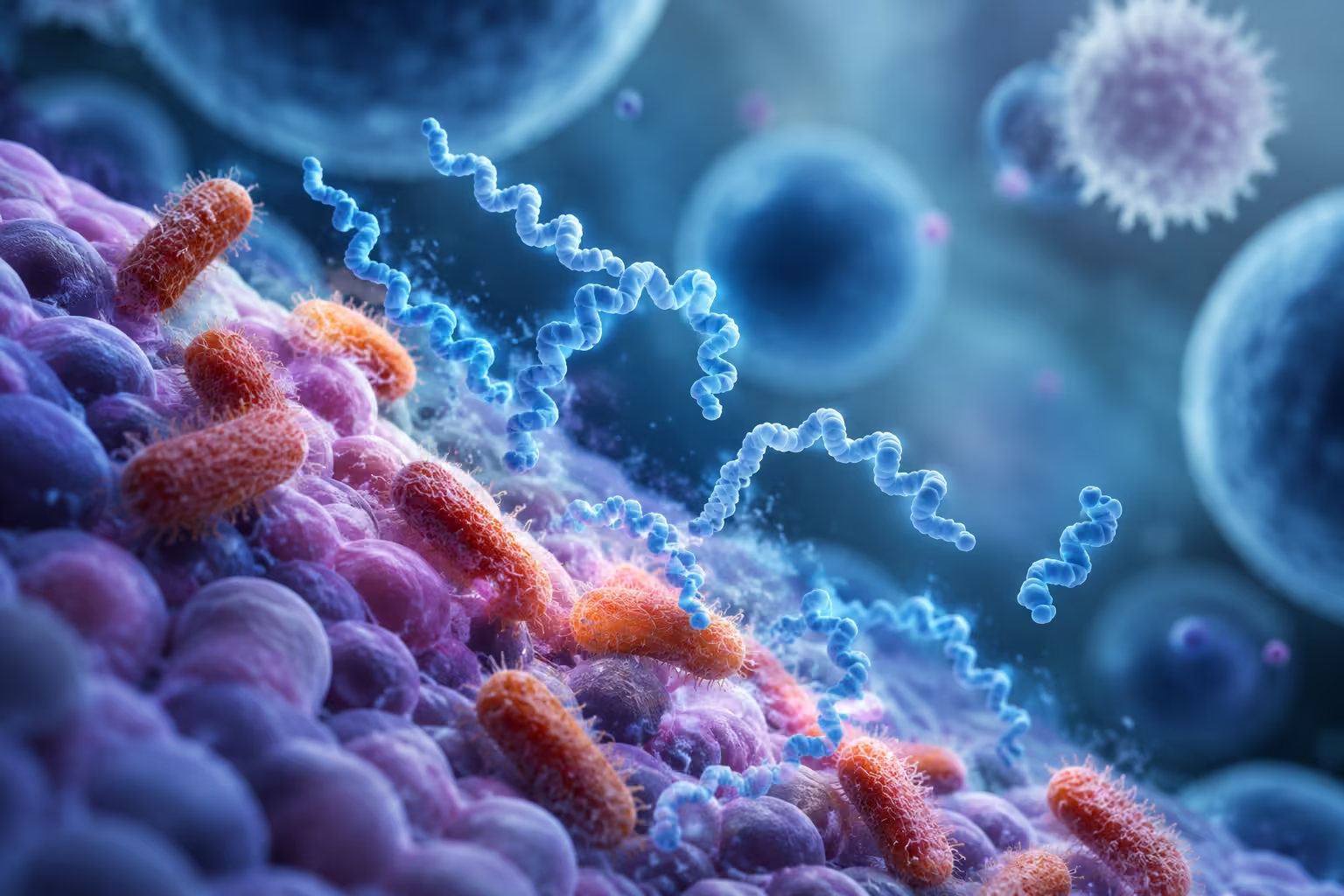
Certain fibres act as prebiotics. These fibres pass through the upper digestive system and reach the large intestine, where beneficial gut bacteria can ferment them.
This process can produce short chain fatty acids, including acetate and butyrate.
Short-chain fatty acids can be used by cells lining the colon and are an important area of nutrition research.
In simple terms, fibre can provide nourishment for certain gut bacteria, while probiotics introduce selected live microorganisms. Together, they can form part of a dietary pattern that supports a diverse gut microbiome.
Prebiotic nourishment occurs when beneficial gut bacteria ferment certain types of fibre.
Examples of prebiotic fibres include certain oligosaccharides, including galacto oligosaccharides, as well as other fermentable fibres found naturally in plant foods.
The human gut contains a complex community of microorganisms. A diverse microbiome includes many different bacterial species and is influenced by diet, lifestyle and other factors.
Current research suggests that eating a variety of fibre-containing foods can support microbiome diversity.
Rather than focusing on one “good bacteria” species, a varied diet provides different types of fibre that can be used by different gut microbes.
The gut microbiome is a complex ecosystem containing bacteria and other microorganisms.
There is no single microbiome composition that is ideal for every person. Individual differences are normal.
However, dietary diversity is an important part of supporting a diverse microbiome. Eating vegetables, fruits, legumes, nuts, seeds and whole grains provides different types of fibre and other beneficial compounds.
This is one reason nutrition experts often encourage variety rather than relying on a small number of foods.
A diverse diet can support gut microbiota, normal gut function and overall nutritional quality.
Certain types of fibre can influence how quickly carbohydrates and other nutrients are absorbed.
Viscous soluble fibres can slow nutrient absorption, which may help moderate changes in blood sugar following meals.
Dietary fibre has also been associated with healthier cholesterol levels as part of an overall balanced diet.
These effects vary depending on the type of fibre, the food source and the overall eating pattern.
For this reason, replacing refined foods with fibre-rich whole foods can be a practical nutritional strategy.
Regular bowel movements are influenced by fibre, fluid intake, physical activity and individual eating habits.
Fibre can add bulk to stool and help support normal movement through the digestive tract. Water absorption is another characteristic of many fibres, which can contribute to softer stool.
However, increasing fibre without adequate fluids may cause discomfort for some people.
A practical approach is to increase fibre gradually while maintaining adequate hydration.
The digestive tract is closely connected with normal immune function.
A large proportion of immune activity is associated with tissues surrounding the digestive system, while gut bacteria interact with the intestinal environment in many ways.
Fibre fermentation produces short-chain fatty acids that are being studied for their role in maintaining the gut environment.
This is one reason gut health and immune health are often discussed together.
However, nutrition should be viewed as one part of overall wellbeing rather than as a standalone solution for specific health concerns.
People with irritable bowel syndrome may have individual responses to different types and amounts of fibre.
Some people tolerate certain soluble fibres more comfortably than large amounts of coarse or rapidly fermented fibre. Increasing fibre gradually can be useful when making dietary changes.
Because digestive responses vary considerably, people with specific health concerns or persistent digestive symptoms should seek individual guidance from a healthcare professional.
The goal is not simply to consume as much fibre as possible, but to find a sustainable amount and variety that fits individual needs.
General recommendations commonly place adult fibre intake somewhere between 25 and 38 grams per day.
A practical target of approximately 25–30 grams can be suitable for many adults, although individual requirements can vary.
Rather than trying to reach the target in one meal, distribute fibre throughout the day.
For example:
Breakfast: Whole grain cereal with berries and nuts.
Lunch: Lentil or chickpea salad with vegetables.
Snack: An apple or pear with seeds.
Dinner: Brown rice with vegetables and beans.
This approach can make adequate fibre easier to achieve without major changes to usual eating habits.
If your current fibre intake is low, increasing it gradually can be more comfortable.
Try these steps:
If bloating or stomach cramps occur after a dietary change, reducing the pace of the increase may be useful.
Not everyone needs probiotic supplements.
Fermented and cultured foods may provide live microorganisms, while supplements can contain specific strains in defined amounts.
The appropriate option depends on individual dietary habits, nutritional needs and the specific microorganism involved.
Probiotics are also not a substitute for dietary fibre. A supplement may provide live microorganisms, but fibre-containing plant foods provide the substrates that many gut bacteria can use.
This is why a balanced diet remains an important foundation.
A simple way to support dietary fibre for digestion is to build meals around minimally processed plant foods.
Consider including:
For example, replacing white bread with a whole-grain alternative can increase fibre intake. Adding beans to soups, salads or main meals can provide both soluble and insoluble fibre.
Small changes repeated consistently can make a meaningful difference to total fibre intake.
Eating the same few fibre sources every day can provide fibre, but a broader variety introduces different types of plant compounds and carbohydrates.
Different vegetables, fruits, legumes, grains, nuts and seeds contain different fibre structures.
This variety may support a more diverse gut microbiome.
Research shows that dietary diversity is an important part of maintaining a healthy gut environment, although individual responses can differ.
The aim should be a varied, balanced diet rather than chasing a specific food or supplement.
Dietary fiber for digestion and probiotics work through different but potentially complementary pathways.
The connection between dietary fiber for digestion, probiotics and the gut microbiome is an evolving area of nutrition research.
Fibre provides structure and bulk to the digestive process, supports regular bowel movements and can provide nourishment for gut bacteria. Certain fibres are fermented in the large intestine, producing short-chain fatty acids and other beneficial compounds.
Probiotics, meanwhile, provide selected live microorganisms. Their effects can depend on the particular strain, amount and individual circumstances.
Rather than treating fibre and probiotics as competing choices, they can be viewed as different components of a varied nutritional approach. Fibre-rich plant foods should remain a regular part of a balanced diet, while probiotic foods or supplements may be considered according to individual preferences and needs.
Gradually increasing fibre, eating a diverse range of plant foods, drinking enough fluids and maintaining regular eating and movement habits can all contribute to a healthy digestive system.
This article is provided for general educational and informational purposes only. It does not replace personalised advice from a healthcare professional. Individual responses to fibre, fermented foods and probiotics can vary, particularly when specific health concerns or ongoing digestive symptoms are present.
Join The Hub community. Subscribe today and receive a monthly email with our newest blogs and articles on health, wellness, and nutrition to keep you informed and inspired.
By signing up you agree to our User Agreement and Privacy Policy & Cookie Statement


Newsletter
By signing up you agree to our User Agreement and Privacy Policy & Cookie Statement
By accessing, browsing, or using this website (the “www.newimage.world/thehub”), you acknowledge and agree to the terms of this Disclaimer. The Website, including its blogs, podcasts, videos, and any other content (collectively, the “Content”), is operated by New Image™ International (“the Company,” “we,” “our,” or “us”).
All Content made available on this Website is provided strictly for general informational and educational purposes only. The Content does not constitute, and should not be relied upon as, medical advice, diagnosis, treatment, prescription, or professional health consultation of any kind.
The Company makes no representations or warranties regarding the accuracy, completeness, reliability, or timeliness of the Content. The Content may include information collected from external or third-party sources, and we do not independently verify such information. Accordingly, no nutritional, health, or wellness claims are endorsed, warranted, or guaranteed by the Company.
To the fullest extent permitted by applicable law:
Your use of the Website does not establish any doctor–patient, nutritionist–client, or other professional relationship between you and the Company or any of its representatives.
The Website may include references, links, or access to third-party websites, podcasts, or resources. The Company does not control, endorse, or assume any responsibility for such third-party content and shall not be held liable for any damages arising from your use of or reliance on it.
By clicking “Accept” on the Website’s pop-up disclaimer, you expressly acknowledge that you have read, understood, and agreed to be bound by this Disclaimer. Your continued use of the Website constitutes ongoing acceptance of these terms. If you no longer agree with this Disclaimer, you must immediately discontinue use of the Website.
Join The Hub community. Subscribe today and receive a monthly email with our newest blogs and articles on health, wellness, and nutrition to keep you informed and inspired.
By signing up you agree to our User Agreement and Privacy Policy & Cookie Statement


















.webp)
.webp)