
Choosing wellness supplements in New Zealand can feel overwhelming. Shelves and online stores contain vitamins, minerals, herbs, oils, powders and specialised formulas designed for different aspects of everyday wellbeing. With so many options available, knowing what to look for can make the purchasing process more straightforward.
Supplements can provide targeted nutrients when a person's diet does not provide enough of a particular nutrient. However, they work best as part of a balanced diet and healthy lifestyle rather than as a replacement for nutritious food, regular movement or quality sleep.
This guide explains how to assess ingredients, product quality, dosage, formulation and practical suitability when choosing wellness supplements in New Zealand.
Wellness supplements are products containing nutrients or other naturally occurring ingredients intended to complement everyday nutrition.
They may contain:
The right choice depends on individual nutritional needs, eating habits, lifestyle factors and specific wellbeing goals.
Quality is important because supplements can differ considerably in their ingredients, quantities and formulation.
Two products may appear similar but contain different forms of the same nutrient, different serving sizes or additional ingredients.
A quality focused approach means checking exactly what is inside the product rather than relying only on packaging or marketing language.
Before purchasing dietary supplements, consider your existing diet.
A varied diet containing vegetables, fruit, whole grains, legumes, nuts, seeds, dairy or alternatives, fish and suitable protein sources can provide many essential nutrients.
Supplements may be useful when there are common nutritional gaps, but taking numerous products without considering dietary intake can make a routine unnecessarily complicated.
Think of supplementation as a supporting element rather than the foundation of everyday wellbeing.
Start by asking what you want your supplement routine to support.
Your goal might involve:
A targeted approach can make it easier to determine which nutrients are relevant.
Always read the complete ingredient list before buying.
Look for clearly stated ingredients and quantities. The label should make it reasonably easy to understand what you are consuming and how much is provided per serving.
Be particularly aware of products containing several herbs, vitamins or minerals in a single formula.
More ingredients do not automatically mean greater value.
The amount listed on the front of a product may not represent the amount provided in one capsule or scoop.
Check:
Understanding serving sizes helps you compare products more accurately.
Different nutrients can appear in different forms.
For example, magnesium may be provided in forms such as magnesium glycinate, while vitamin C may appear in several formulations.
The form can influence factors such as absorption, tolerability and how easily a product fits into your routine.
If you are unsure which form is appropriate, a qualified healthcare professional can provide individual guidance.
Popular wellness supplements in New Zealand include magnesium, vitamin D, omega-3 fatty acids, probiotics and multivitamins.
Their potential role varies.
Magnesium contributes to normal muscle and nervous system function and is commonly included in routines focused on relaxation and sleep quality.
Vitamin D contributes to calcium absorption and is relevant to bone health and normal immune function.
Omega-3 fatty acids provide essential fats that contribute to normal cardiovascular and brain function.
Probiotic products are commonly used as part of routines focused on gut power health and digestion.
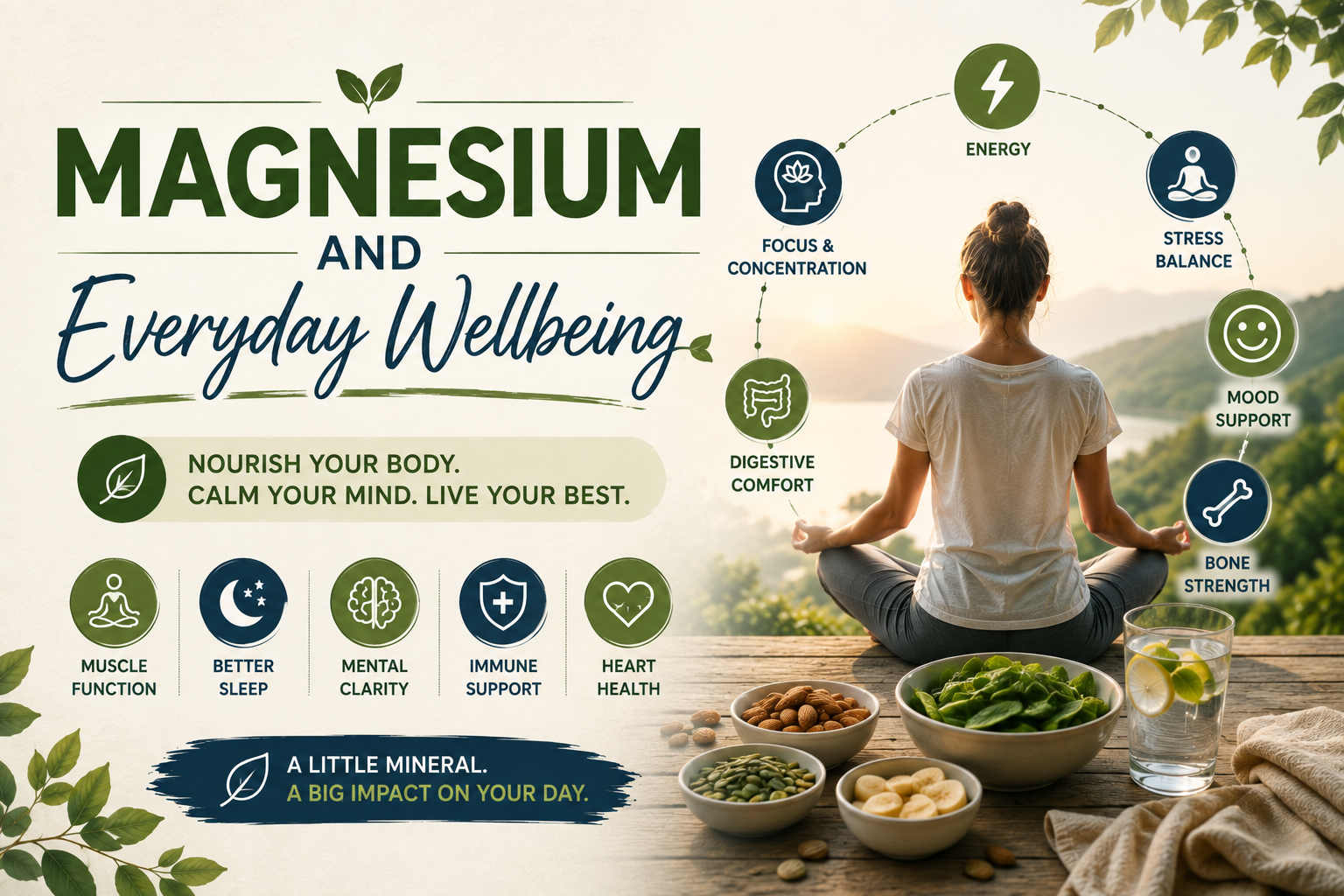
Magnesium is an essential mineral involved in numerous processes within the body.
It contributes to normal muscle function and nervous system function and is often considered when people are looking at sleep, relaxation and daily stress management.
Food sources include nuts, seeds, whole grains, legumes and leafy vegetables.
A supplement may be considered where dietary intake is insufficient, although the appropriate amount depends on individual circumstances.
Vitamin D plays an important role in calcium absorption and contributes to maintaining healthy bones.
People with limited sun exposure may pay particular attention to vitamin D intake.
Food sources include eggs and certain fortified foods, while supplements are another option when appropriate.
The goal should be to consider overall nutrition rather than relying on a single vitamin for general wellbeing.
Omega-3 fatty acids are found naturally in oily fish and some plant foods.
They are widely included in wellness routines because they provide essential fatty acids that contribute to normal body functions.
When choosing an omega-3 supplement, check the amounts of the specific fatty acids provided rather than looking only at the total oil content.
Probiotics contain live microorganisms that are intended to complement the existing gut microbiome.
Food sources can include yoghurt, kefir and certain fermented foods.
When considering probiotic supplements, look at the specific strains, quantities and storage instructions provided on the label.
Different probiotic products can contain different microorganisms, so they should not all be considered interchangeable.
Collagen supplements are another option found within the wellness market.
Collagen is a structural protein found naturally throughout the body. It is often included in products designed around skin, joint and general wellbeing routines.
Research into collagen supplementation continues to develop, and individual responses can vary.
A nutritious diet containing adequate protein remains an important foundation for normal tissue maintenance.
Herbal products are also popular within natural health routines.
Ingredients such as ashwagandha are sometimes used in wellness routines focused on stress resilience and mental clarity.
Other herbal blends may contain ingredients such as olive leaf or echinacea.
Because herbal ingredients can have active effects within the body, it is sensible to research the ingredients carefully and consider professional guidance when necessary.
When comparing products, transparency is useful.
Look for information about:
Products with clear information are easier to evaluate than those that provide vague descriptions.
Third-party testing can provide additional information about the identity, purity or consistency of ingredients.
Traceability is also useful, particularly for products containing herbs, oils or naturally sourced ingredients.
A transparent manufacturer should be able to provide meaningful information about where ingredients come from and how products are handled.
Higher quantities are not automatically more appropriate.
Some vitamins and minerals can accumulate in the body or cause unwanted effects when consumed in excessive amounts.
This is particularly relevant when several supplements are taken together.
For example, someone using a multivitamin alongside individual vitamin and mineral products should check whether ingredients overlap.
A common mistake is gradually adding many supplements without reviewing the overall routine.
A person might start with vitamin D, add magnesium, then add an omega-3 product, followed by a multivitamin and several herbal products.
Over time, this can make it difficult to identify which products are actually relevant.
A simpler routine may be easier to maintain and evaluate.
Your supplement routine should fit your everyday schedule.
Think about whether you prefer capsules, powders, liquids or food-based options.
If you already have a busy morning, adding several products that require precise timing may make your routine difficult to maintain.
A practical supplement routine is one that fits naturally alongside meals, hydration, exercise and sleep.
Some supplements can be taken with food, while others may have specific instructions.
Fat-soluble vitamins are generally better absorbed when consumed with a meal containing some healthy fats.
Other nutrients may be suitable with or without food.
Always follow the product's directions rather than assuming every supplement should be taken in the same way.
Nutritional requirements can change throughout life.
Safe pregnancy, older age, changes in physical activity, restricted diets and periods of limited sun exposure can all influence nutritional needs.
This is one reason a supplement routine should be personalised rather than copied from another person's routine.
Food provides more than individual vitamins and minerals.
Whole foods also contain protein, fibre, healthy fats and a wide variety of naturally occurring compounds.
For example, oily fish provides omega-3 fatty acids alongside protein and other nutrients. Leafy vegetables provide minerals, fibre and plant compounds.
Supplements can complement these foods, but they do not replicate the complete nutritional profile of a varied diet.
Certain supplements can interact with medicines, treatment or other supplements.
This is particularly important when taking multiple products or using concentrated herbal ingredients.
Anyone taking regular medicines, managing a specific health concern or considering a substantial change to their nutrition routine should discuss supplementation with a healthcare professional.
Once a supplement becomes part of your daily routine, pay attention to how your body responds.
Keep a simple record of:
Tracking can help you identify patterns and decide whether a particular product remains useful.
Your nutritional needs are not necessarily fixed.
Changes in diet, activity levels, lifestyle, age or sun exposure may influence whether a supplement remains relevant.
Reviewing your routine periodically can help prevent unnecessary products from becoming permanent habits.
Consider reassessing a supplement if:
A smaller, more focused routine can sometimes be easier to manage.
For many adults, the foundation should remain straightforward:
This approach keeps supplements in their proper place within a broader healthy lifestyle.
Before purchasing wellness supplements in New Zealand, ask yourself:
These questions can help make purchasing decisions more deliberate.
The supplement market offers a wide range of products for different wellness goals. The challenge is not finding more products, but identifying what is relevant to your individual needs.
A thoughtful approach to wellness supplements in New Zealand starts with nutritious food, healthy lifestyle habits and a clear understanding of your nutritional requirements.
Whether you are considering magnesium for your daily routine, vitamin D during periods of limited sun exposure, omega-3 fatty acids, probiotics or another targeted nutrient, focus on transparent ingredients, appropriate serving sizes and practical use.
Supplements can form part of everyday wellbeing, but they are only one element of the bigger picture. Consistent eating habits, movement, hydration, sleep and stress management remain important foundations for general health.
This article is intended for general educational and informational purposes only. It does not replace personalised advice from a qualified healthcare professional. Individual nutritional needs can vary, and supplements may not be suitable for everyone. Always consider your own circumstances, existing dietary intake and any other products or medicines you use before making changes to your supplement routine.

Join The Hub community. Subscribe today and receive a monthly email with our newest blogs and articles on health, wellness, and nutrition to keep you informed and inspired.
By signing up you agree to our User Agreement and Privacy Policy & Cookie Statement


Newsletter
By signing up you agree to our User Agreement and Privacy Policy & Cookie Statement
By accessing, browsing, or using this website (the “www.newimage.world/thehub”), you acknowledge and agree to the terms of this Disclaimer. The Website, including its blogs, podcasts, videos, and any other content (collectively, the “Content”), is operated by New Image™ International (“the Company,” “we,” “our,” or “us”).
All Content made available on this Website is provided strictly for general informational and educational purposes only. The Content does not constitute, and should not be relied upon as, medical advice, diagnosis, treatment, prescription, or professional health consultation of any kind.
The Company makes no representations or warranties regarding the accuracy, completeness, reliability, or timeliness of the Content. The Content may include information collected from external or third-party sources, and we do not independently verify such information. Accordingly, no nutritional, health, or wellness claims are endorsed, warranted, or guaranteed by the Company.
To the fullest extent permitted by applicable law:
Your use of the Website does not establish any doctor–patient, nutritionist–client, or other professional relationship between you and the Company or any of its representatives.
The Website may include references, links, or access to third-party websites, podcasts, or resources. The Company does not control, endorse, or assume any responsibility for such third-party content and shall not be held liable for any damages arising from your use of or reliance on it.
By clicking “Accept” on the Website’s pop-up disclaimer, you expressly acknowledge that you have read, understood, and agreed to be bound by this Disclaimer. Your continued use of the Website constitutes ongoing acceptance of these terms. If you no longer agree with this Disclaimer, you must immediately discontinue use of the Website.
Join The Hub community. Subscribe today and receive a monthly email with our newest blogs and articles on health, wellness, and nutrition to keep you informed and inspired.
By signing up you agree to our User Agreement and Privacy Policy & Cookie Statement




















.webp)
.webp)