
Building habits for better gut health starts with understanding that the digestive system is influenced by much more than individual foods. The gut microbiome, also called the gut microbiota, contains a vast community of microorganisms that interact with the food we eat, the digestive tract, the immune system and many other aspects of everyday wellbeing.
A healthy gut microbiome is diverse and constantly changing. There is no universally defined “perfect microbiome” because healthy microbial communities can differ between individuals. However, current research suggests that a diverse microbiome is generally associated with better overall health.
Daily choices involving food, movement, sleep, hydration and stress management can all contribute to maintaining gut health. Supplements may have a role in some circumstances, but they should complement a diverse diet rather than replace whole foods.
This guide explores practical ways to improve your gut health, including gut friendly foods, fermented foods, dietary fibre, prebiotics, probiotics, exercise, sleep and everyday habits.
The gut microbiome refers to the community of microorganisms living throughout the gastrointestinal tract, particularly within the large intestine.
These gut microbes include many different types of bacteria and other microorganisms. Collectively, the human gut microbiota interacts with food components and produces compounds that can influence digestion and other normal body processes.
The gut microbiome is considered an important interface between:
Diet
Immunity
Metabolism
The nervous system
Digestive health
Current research suggests that gut microbes help break down components of food that the human digestive system cannot fully process on its own.
Gut health plays an important role in general wellbeing because the digestive system helps break down food and absorb nutrients.
The gut is also closely connected with the immune system. Around 70% of the body's immune system is often described as being associated with the gut and surrounding intestinal tissues. Gut microbes interact with immune processes and help the body maintain a balanced relationship with microorganisms.
The microbiome also communicates with the nervous system through what is commonly called the gut-brain axis. This involves multiple signals between the gut and brain.
Current research suggests that gut microbes can produce compounds, including short-chain fatty acids and certain neurotransmitter-related substances, that may influence mood and cognitive processes. This is one reason gut health and mental health are increasingly studied together.
A healthy gut does not necessarily mean having a particular set of bacteria.
Current research suggests that a healthy microbiome can vary considerably between individuals. Instead of focusing on one specific microorganism, researchers often examine characteristics such as microbial diversity and the balance of different microbial communities.
A diverse gut microbiome contains a wide variety of bacteria that interact with one another and with the foods consumed.
Maintaining a diverse diet is therefore one practical way of supporting a healthy microbiome.
One simple goal for better gut health is to aim for around 30 different plant foods each week.
This does not mean eating 30 servings every day. Instead, the focus is on variety across the week.
Plant foods can include:
Apples
Berries
Bananas
Carrots
Broccoli
Spinach
Tomatoes
Peas
Beans
Lentils
Oats
Brown rice
Seeds
Nuts
Herbs and spices
Eating a wide range of plant foods provides different types of dietary fibre and plant compounds that can interact with gut microbes.
High fibre foods are central to a gut-friendly eating pattern.
Dietary fibre provides material that certain gut bacteria can ferment. During this process, gut microbes produce short-chain fatty acids, including acetate and butyrate.
These compounds are an important area of research because they interact with the cells lining the large intestine and contribute to normal gut function.
Good sources include:
Whole grains
Beans
Lentils
Vegetables
Fruits
Nuts
Seeds
Current research suggests that diets containing sufficient fibre support microbial diversity and normal digestive function.
Prebiotic foods contain substances that can be used by beneficial gut bacteria as a food source.
Examples include:
Onions
Garlic
Leeks
Asparagus
Oats
Bananas
Beans
Lentils
These foods can form part of a diverse diet that supports the growth and activity of beneficial bacteria.
Rather than looking for a single “gut health food”, including a variety of plant foods throughout the week provides a broader nutritional foundation.
Fermented foods have been consumed for thousands of years and are now receiving considerable attention in discussions about gut health.
Examples include:
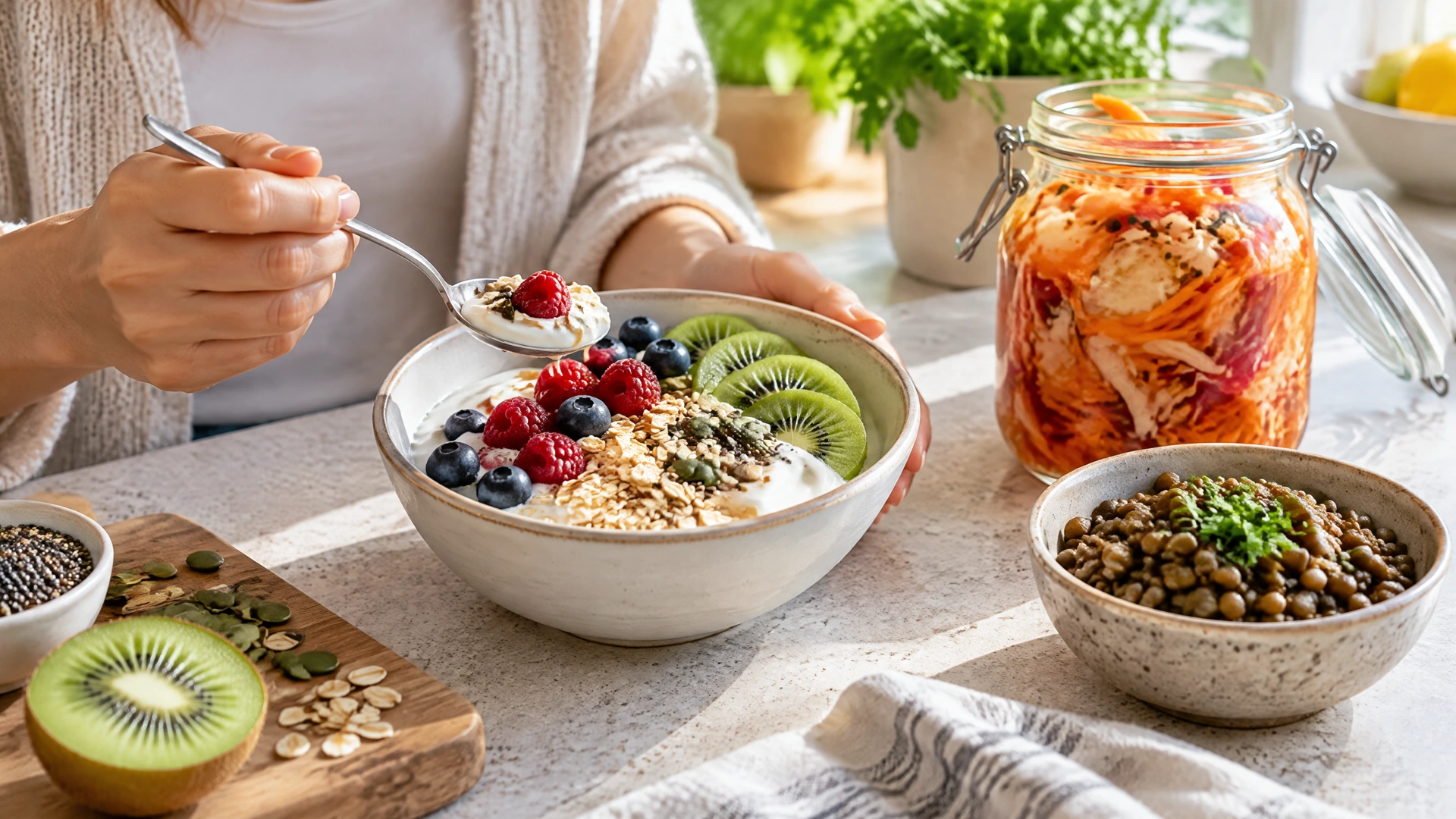
Yoghurt
Kefir
Kimchi
Sauerkraut
Certain fermented vegetables
Yoghurt, kefir and kimchi are commonly described as probiotic foods because some varieties contain live microorganisms.
However, not all fermented foods contain live probiotics. Processing, heating and storage can affect whether live bacteria remain in the finished food.
Current research suggests that regularly including a variety of fermented foods may contribute to greater gut microbiome diversity in some people.
Probiotic foods and probiotic supplements are not identical.
Fermented foods can provide live bacteria alongside other nutrients. Supplements typically contain selected microbial strains in specific quantities.
Current research, including randomized controlled trials, continues to investigate how particular probiotic strains interact with the human gut microbiota.
Because individual responses vary, probiotic supplementation should not automatically be considered necessary for everyone.
For general better gut health, a diverse diet containing fibre-rich plant foods and suitable fermented foods can provide a strong nutritional foundation.
A diet centred on whole foods can provide fibre, vitamins, minerals and other nutrients that support overall nutrition.
Useful choices include:
Vegetables
Fruits
Whole grains
Beans
Lentils
Nuts
Seeds
Fish
Eggs
Natural yoghurt
Current research suggests that diets containing a greater variety of minimally processed plant foods are generally associated with greater microbiome diversity.
Frequently eating ultra processed foods may reduce the overall variety of foods in the diet.
A high intake of processed foods can also displace fibre-rich plant foods, which may influence the nutrients available to gut microbes.
This does not mean every processed food needs to be avoided. Instead, consider making whole and minimally processed foods the regular foundation of meals while enjoying processed foods in moderation.
A consistently high sugar diet may influence the composition of gut bacteria.
Current research suggests that diets high in refined sugars and low in fibre may be associated with less favourable microbial diversity.
Practical steps include reducing frequent consumption of:
Sugary drinks
Sweets
Cakes
Biscuits
Highly sweetened snacks
Replacing some of these foods with fruit, yoghurt, nuts or other gut healthy options can increase dietary variety.
Eating habits matter as well as food choices.
Eating slowly and taking time to chew food thoroughly can make meals more comfortable and encourage greater awareness of hunger and fullness.
Practical habits include:
Sitting down for meals
Reducing distractions
Taking smaller bites
Chewing food thoroughly
Allowing enough time to eat
These simple practices may be useful for people who experience occasional digestive discomfort after eating quickly.
Proper hydration is essential for normal digestion and regular bowel movements.
Water supports the movement of food through the digestive tract and works alongside dietary fibre.
If fibre intake increases significantly without sufficient fluids, some people may experience digestive discomfort.
Useful habits include:
Drinking water regularly
Having water with meals
Carrying a water bottle
Increasing fluid intake during physical activity or hot weather
Hydration is one of the simplest habits for supporting digestive health.
Regular physical activity can support overall metabolic health and normal gut motility.
Activities such as:
Walking
Cycling
Swimming
Strength training
Yoga
Recreational sports
can be incorporated into daily life.
You do not necessarily need long workouts. Regular movement throughout the day can complement a gut friendly eating pattern.
The gut and brain communicate through the gut-brain axis, meaning emotional and physical experiences can influence digestive processes.
Current research suggests that chronic stress can alter gut microbiome structure and function.
Practical stress management strategies include:
Walking outdoors
Breathing exercises
Mindfulness
Meditation
Relaxation techniques
Spending time with friends
Quiet reflection
Managing stress levels may contribute to digestive comfort and overall wellbeing.
Sleep is another important part of maintaining gut health.
Current research suggests that sleep disturbances may be associated with changes in gut bacteria, while better sleep has been linked with greater microbial diversity in some research.
Helpful habits include:
Maintaining a regular sleep schedule
Creating a relaxing bedtime routine
Limiting screens before bed
Keeping the bedroom comfortable
Allowing enough time for sleep
A good night's rest supports energy levels and general wellbeing while complementing other healthy habits.
The connection between the gut and brain continues to be an active area of research.
The gut-brain axis involves communication through nervous, immune and chemical signals. Gut microbes also produce compounds that may influence brain-related processes.
Current research suggests that maintaining a diverse microbiome may be relevant to mental wellbeing, although the relationship is complex and cannot be explained by a single food or supplement.
Healthy eating, regular exercise, adequate sleep and stress management should therefore be considered together.
Research has explored relationships between the gut microbiome and skin health, including whether changes in microbial communities may be associated with certain skin conditions.
An imbalanced microbiome has also been investigated in relation to inflammatory processes throughout the body.
However, these relationships are complex and should not be interpreted as proof that changing the microbiome will resolve a particular skin or health concern.
For general wellness, maintaining a diverse microbiome through balanced nutrition, movement, sleep and stress management remains a practical approach.
Unintentional changes in body weight can occur for many reasons.
Changes in eating patterns, activity, stress, sleep and other lifestyle factors may all influence body weight.
Some research has explored relationships between gut bacteria and body composition, but microbiome changes should not automatically be considered the explanation for unexplained weight changes.
If you experience persistent or unexplained changes in weight, digestive symptoms or other health concerns, discussing them with a healthcare professional is appropriate.
Probiotic supplements may be useful in some circumstances, but they are not essential for everyone seeking better gut health.
Different probiotic products contain different strains and quantities of live bacteria. Current research suggests that effects can vary according to the specific strain, individual and dietary context.
Before taking a supplement, consider whether your diet already contains:
Fermented foods
High-fibre foods
Prebiotic foods
Whole grains
Fruits and vegetables
A varied diet remains the foundation of healthy nutrition.
A simple daily routine could include:
Start with water and a breakfast containing fibre and protein.
Choose a variety of plant foods and drink fluids regularly.
Build meals around vegetables, whole grains and a suitable protein source.
Choose fruit, nuts, seeds or yoghurt when appropriate.
Allow enough time for a relaxing meal, avoid eating too quickly and prioritise better sleep.
These habits are practical ways to support a healthy gut microbiome without making nutrition unnecessarily complicated.
Try including:
30 different plant foods
Several servings of vegetables each day
Fruits in a variety of colours
Whole grains
Beans and lentils
Nuts and seeds
Prebiotic foods
Fermented foods
Suitable sources of protein
Adequate water
Variety is important because different gut microbes love different types of fibre and plant compounds.
Some everyday patterns may make it more difficult to maintain a diverse microbiome.
These can include:
Very limited food variety
Low-fibre eating patterns
Frequent ultra-processed foods
High intake of refined sugars
Insufficient hydration
Prolonged inactivity
Persistent stress
Poor sleep
Excessive alcohol consumption
The aim is not perfection. Instead, gradually replacing less nutritious choices with gut healthy foods can create sustainable improvements in eating patterns.
The most practical principles for better gut health include:
Eat a diverse range of plant foods.
Aim for around 30 different plant foods each week.
Choose high fibre foods regularly.
Include prebiotic foods.
Eat fermented foods such as yoghurt, kefir and kimchi when suitable.
Remember that not every fermented food contains live probiotics.
Choose whole foods more often.
Limit frequent ultra-processed foods and refined sugars.
Drink enough water.
Eat slowly and chew thoroughly.
Stay physically active.
Manage stress.
Prioritise sleep quality.
Consider probiotic supplements carefully rather than automatically.
Seek professional guidance for persistent digestive symptoms or other health concerns.
Achieving better gut health does not require a complicated programme. The foundation is a diverse diet containing vegetables, fruits, whole grains, beans, lentils, nuts, seeds and other plant foods, combined with adequate hydration and regular movement.
Fermented foods can add variety, while prebiotic foods provide substrates that beneficial bacteria can use. Probiotic foods such as yoghurt, kefir and kimchi may provide live microorganisms, although not every fermented food contains live probiotics.
Beyond nutrition, gut health is connected with everyday lifestyle factors. Regular exercise, effective stress management, sufficient sleep and mindful eating can all form part of a sustainable approach to maintaining gut health.
Current research continues to explore the relationship between the gut microbiome, digestion, immunity, metabolism, mood and general wellbeing. There is no single perfect microbiome and no single food that guarantees a healthy gut. Instead, consistent habits and dietary variety provide a practical foundation for supporting digestive and overall health.
This article is provided for general educational and informational purposes only. It does not replace personalised advice from a qualified healthcare professional. Individual digestive and nutritional needs vary. If you have persistent digestive discomfort, unexplained changes in bowel habits, food-related concerns or an existing health condition, seek appropriate professional guidance before making significant dietary or supplement changes.
Join The Hub community. Subscribe today and receive a monthly email with our newest blogs and articles on health, wellness, and nutrition to keep you informed and inspired.
By signing up you agree to our User Agreement and Privacy Policy & Cookie Statement


Newsletter
By signing up you agree to our User Agreement and Privacy Policy & Cookie Statement
By accessing, browsing, or using this website (the “www.newimage.world/thehub”), you acknowledge and agree to the terms of this Disclaimer. The Website, including its blogs, podcasts, videos, and any other content (collectively, the “Content”), is operated by New Image™ International (“the Company,” “we,” “our,” or “us”).
All Content made available on this Website is provided strictly for general informational and educational purposes only. The Content does not constitute, and should not be relied upon as, medical advice, diagnosis, treatment, prescription, or professional health consultation of any kind.
The Company makes no representations or warranties regarding the accuracy, completeness, reliability, or timeliness of the Content. The Content may include information collected from external or third-party sources, and we do not independently verify such information. Accordingly, no nutritional, health, or wellness claims are endorsed, warranted, or guaranteed by the Company.
To the fullest extent permitted by applicable law:
Your use of the Website does not establish any doctor–patient, nutritionist–client, or other professional relationship between you and the Company or any of its representatives.
The Website may include references, links, or access to third-party websites, podcasts, or resources. The Company does not control, endorse, or assume any responsibility for such third-party content and shall not be held liable for any damages arising from your use of or reliance on it.
By clicking “Accept” on the Website’s pop-up disclaimer, you expressly acknowledge that you have read, understood, and agreed to be bound by this Disclaimer. Your continued use of the Website constitutes ongoing acceptance of these terms. If you no longer agree with this Disclaimer, you must immediately discontinue use of the Website.
Join The Hub community. Subscribe today and receive a monthly email with our newest blogs and articles on health, wellness, and nutrition to keep you informed and inspired.
By signing up you agree to our User Agreement and Privacy Policy & Cookie Statement

















.webp)
.webp)